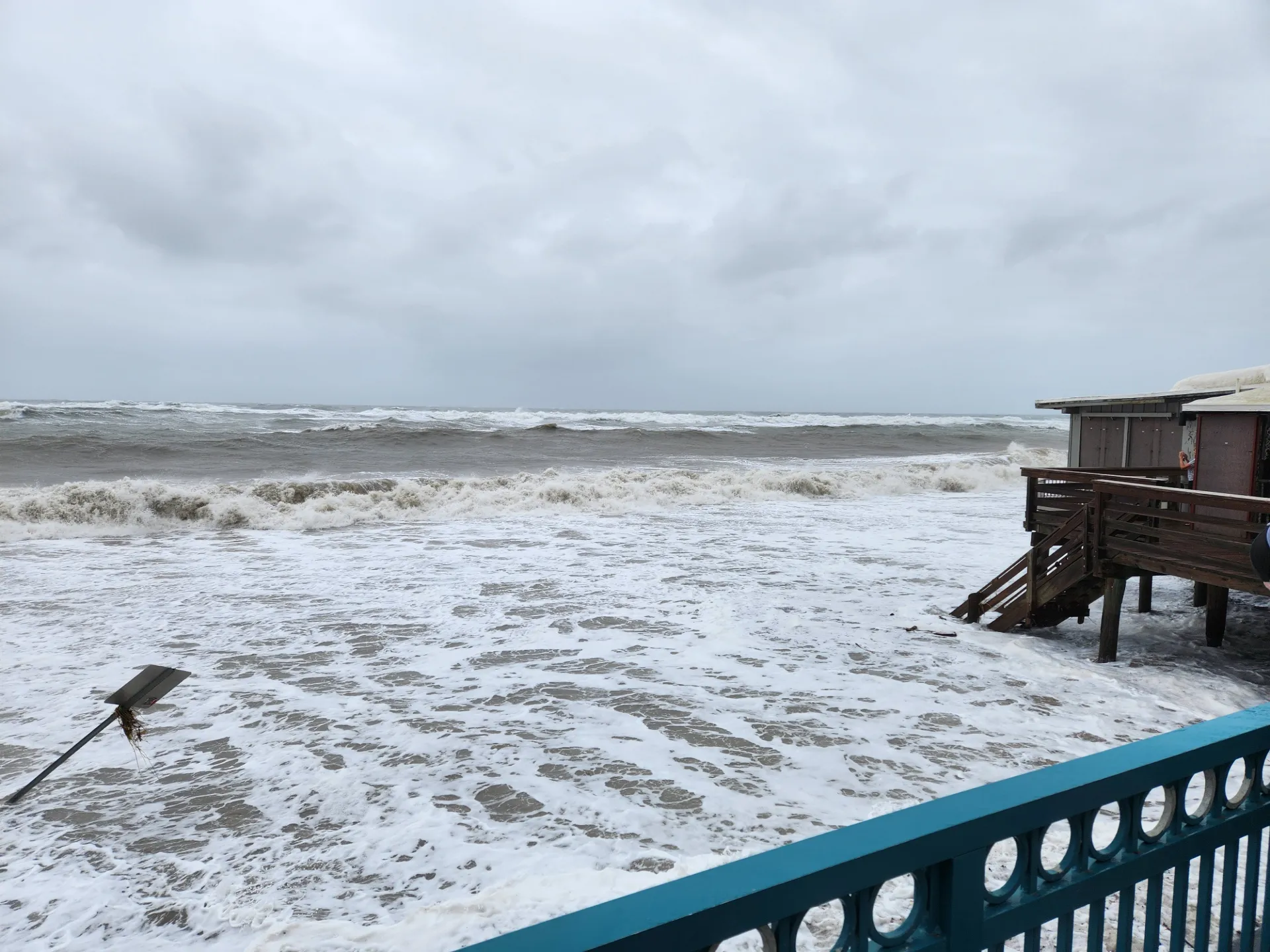
Hurricane and Insurance Reality on Vero Beach's Barrier Island
Storm risk and insurance pricing are real budget lines on the barrier island.
Buying on the barrier island means buying into a coastline. The Atlantic is the reason owners are here. It is also the reason insurance is a real budget line and why every renovation conversation includes a code review. This is a frank, non-alarmist read on what storm and insurance reality looks like on the barrier island, written for buyers who want the full picture before they sign. (Our month-by-month seasonal guide covers what hurricane prep actually looks like in practice.)
What 2004 Changed
Hurricane Frances made landfall in early September 2004 just south of Sewall's Point, with the Vero Beach barrier island, and the A1A corridor that runs its length, in the right-front quadrant. Three weeks later, Hurricane Jeanne struck almost the same spot. Together, the two storms sat over Indian River County for parts of three days and reshaped both the building code conversation and the insurance market.
The result, more than two decades later: structures built or substantially renovated to post-2004 Florida Building Code standards perform meaningfully better in storms than older structures that have not been hardened. The code requires impact-rated windows or shutters, tied-down roof structures, garage doors built to specified pressures, and a long list of detail-level items that older homes either meet, partially meet, or do not meet at all. Pre-2004 homes that have been retrofitted are common on the island and often perform well. Pre-2004 homes that have not been retrofitted are the ones that struggle.
The Two Coverages You Need to Understand
Wind Coverage
Standard homeowners insurance in Florida typically excludes hurricane and wind damage along the coast. Buyers either obtain wind coverage through their standard policy at a higher premium with a separate hurricane deductible, or through Citizens Property Insurance Corporation if private market quotes are unavailable. The barrier island is in the Wind-Borne Debris Region, which means stricter code requirements and, in many cases, higher premiums.
Flood Coverage
Wind and flood are separate. Most barrier island parcels sit in FEMA flood zones AE, VE, or X depending on elevation and proximity to the dune line and lagoon. Lenders require flood insurance in AE and VE zones for mortgaged properties. Coverage is available through the National Flood Insurance Program (NFIP) and a growing private flood market that often offers better terms above the NFIP coverage cap.
Wind Mitigation Inspections
A wind mitigation inspection is a cheap document that can save thousands of dollars per year in premium. The inspector documents specific construction features (roof shape, roof-deck attachment, roof-to-wall connection, opening protection, secondary water resistance) that qualify the home for credits with the insurer. Any buyer should commission a current wind mitigation inspection at purchase. Any owner of a home built before 2004 should have an updated inspection any time renovations touch a qualifying element.
Elevation and the Flood Question
Elevation matters. A home one street west of A1A in an X zone may carry no flood requirement and a modest voluntary policy. The same buyer's second-choice home, two blocks away in an AE zone, may need a $4,000 NFIP policy and a separate excess flood layer. An elevation certificate is a standard document that buyers should request during diligence. Any home built or renovated since the most recent FEMA map update will have a current elevation reading on file.
Storm Surge vs. Wind: A Geographic Read
The barrier island has two flood-risk geographies. The dune line side (east) is exposed to ocean overwash and storm surge in a major storm. The lagoon side (west) is exposed to lagoon-side surge and wind-driven flooding from the west. Mid-island parcels, particularly those at higher elevations, are the least exposed on both fronts, but no parcel on the island is risk-free.
Wind risk is more uniform. Every parcel on the barrier island sits in the same Wind-Borne Debris Region. The difference between two homes' wind performance is the construction itself, not the location.
What a Realistic Storm Year Looks Like
An average season for the barrier island includes monitoring two to four named storms in the Atlantic, two or three formal storm-prep weeks during which owners ready shutters, secure outdoor furniture, and review supplies, and (in most years) no direct impact. Direct hits at the intensity of Frances or Jeanne are rare. Brushes, including tropical storm conditions and outer-band weather, happen with some regularity.
The discipline that matters: a maintained shutter or impact-window package, a current generator with serviced fuel, a documented insurance policy with current limits, and a plan for the home if owners are out of state when a storm threatens. Most of the island operates this way as a baseline.
Insurance Costs in Plain English
Wind, flood, and standard homeowners coverage on a typical barrier island home generally runs higher than mainland coverage of the same value. Exact pricing depends on construction year, wind mitigation features, elevation, replacement cost, and ownership profile. Expect insurance to be a meaningful annual expense, not a footnote, and budget accordingly. Buyers who get this number from an insurance broker before making an offer have an easier closing process.
Renovations and Code
Any substantial renovation on a barrier island home triggers a code conversation. The Florida Building Code requires impact protection on openings in any new construction or substantial improvement. Roof replacement triggers updated tie-down requirements. Removing or relocating a window triggers a structural review. The code is exacting, and a contractor who does not specialize in coastal Florida work will struggle. Vetted local contractors and architects make a real difference.
The Honest Bottom Line
The barrier island is a coastline, not a hedge. Storm risk is real, insurance is more expensive than mainland coverage, and the building code is strict because it has to be. The trade is the lifestyle: direct ocean access, a walkable village, and a private-club density that makes 32963 one of Florida's best investments that does not exist anywhere else on this stretch of Florida. Buyers who go in clear-eyed handle ownership well. Buyers who treat insurance and code as someone else's problem are the ones surprised at the first renewal.