The Driftwood Inn: Waldo Sexton's Beachfront Legacy
The Driftwood Inn anchors Ocean Drive and pre-dates almost everything around it.
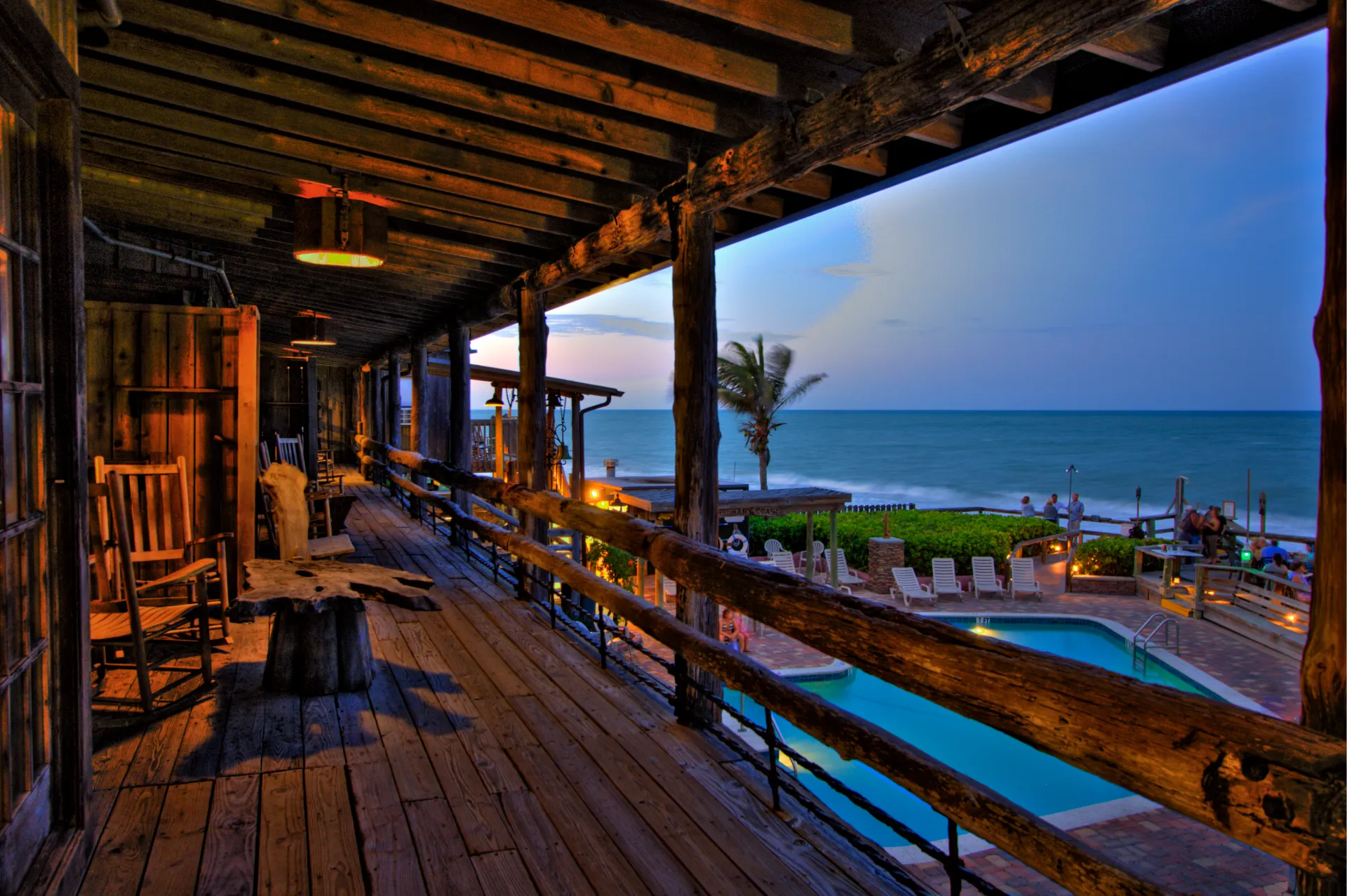
The Driftwood Inn sits on Ocean Drive between Beachland Boulevard and the dune line, a low cluster of weathered cypress and ironwork that looks improvised and is, exactly, improvised. Waldo Sexton built it in 1935 from salvaged shipwreck timbers, river-rock chimneys, hand-forged hardware, and whatever else struck him as worth keeping. Almost a century later it is still standing, still operating as an inn, and still the strongest single piece of cultural memory on the barrier island. The story of how it got built, and why it survived, explains a lot about how the island became what it is.
Who Waldo Sexton Was
Waldo Sexton arrived in Vero in 1914 from Indiana. He was twenty-eight, broke, and ambitious. Over the next forty years he built businesses, bought land, founded the citrus operation that became the Driftwood Cattle Company, and developed a habit of acquiring architectural salvage at a scale that bordered on hoarding. Bells from Spanish missions, ironwork from demolished hotels, pecky cypress from logging operations, hand-painted tiles, and a long list of what would now be called rescued artifacts piled up on his property. He needed somewhere to put them.
Why He Built the Driftwood
By the early 1930s, Sexton's beach property near the present-day intersection of Ocean Drive and Sexton Plaza held a growing collection of materials. The story Sexton himself told (and there are several variants) was that the inn started as a beachfront retreat for friends, then expanded organically as more salvage arrived and more rooms were needed. He used what he had. The walls are pecky cypress. The interior posts are ship timbers. The bell collection (over five hundred bells, by some counts, hung from beams and rafters and exterior eaves) was the largest in private hands in Florida for decades.
The Driftwood was never designed in the conventional sense. It was assembled. Plans were drawn after construction, when the building inspector asked for them.
What Survived
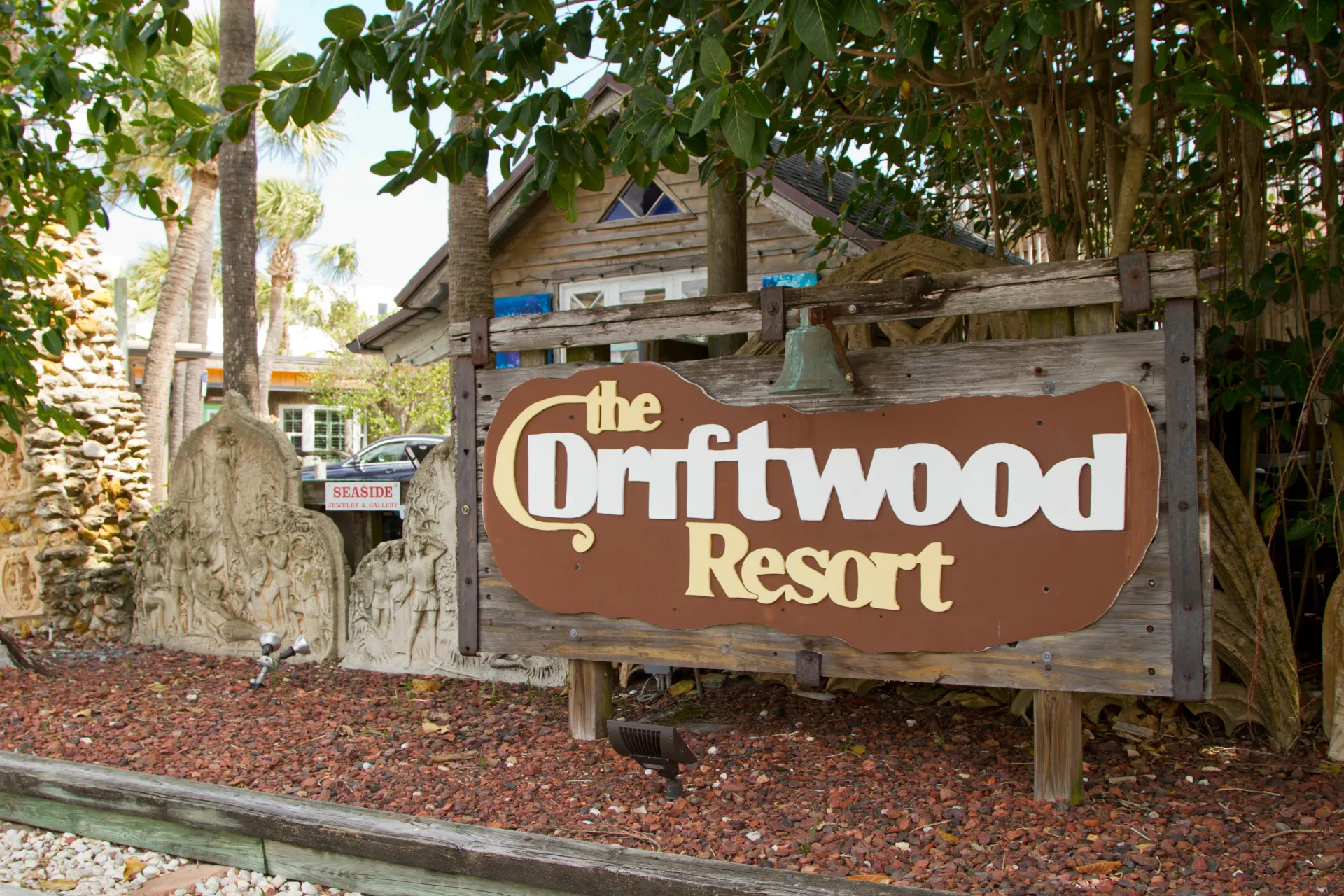
The original Driftwood structures still stand. The inn has been renovated, expanded, and reinforced multiple times across nine decades, but the core remains. Hurricanes, including Frances and Jeanne in 2004, damaged but did not destroy the building. The bells are mostly still there. The bar, the courtyard, the pecky cypress walls, and the sense that the building was constructed by someone who did not particularly care about right angles all remain.
The Driftwood is on the National Register of Historic Places (added in 1994) and is one of the few private commercial buildings in Indian River County to carry that designation.
Sexton's Other Buildings
The Driftwood is the most famous, but it is not the only Sexton structure on the island and adjacent areas. Several other buildings show his hand and his salvage style:
- The Ocean Grill on Sexton Plaza, opened in 1941 and still operating (including a seasonal Sunday breakfast). The pecky cypress, the ironwork, and the building's signature beams are pure Sexton.
- The Patio, originally a Sexton building in downtown Vero, served decades as a restaurant and event space.
- Hall of Giants and Spanish Kitchen at McKee Botanical Garden, both Sexton constructions originally built for the McKee Jungle Gardens attraction in the 1930s. The Hall of Giants, in particular, holds the longest single hand-carved table in the world (allegedly).
The pattern across all of these buildings is the same: salvage, eccentric scale, and a willingness to build first and explain later.
The Cultural Anchor
The reason the Driftwood matters beyond its own walls is that it set the tone for what Vero Beach decided to be. The island could have followed the pattern of Palm Beach or the Gold Coast. Instead, the central village kept a small-scale, eccentric, lived-in character that traces directly back to Sexton's choices. Riomar's quiet shaded streets, Ocean Drive's mix of cottages and small commercial buildings, the absence of high-rises in the central village, all of it reflects an aesthetic Sexton helped establish through sheer force of personality.
The bells matter, too. They are the easiest visible reminder that a real eccentric built this building, and that the community has been content to leave that eccentricity in place. Cities that lose their original eccentrics tend to lose what made them distinct. Vero kept its.
The Driftwood Today
The inn operates as a vacation rental property under a fractional ownership and rental management structure. The bar (the Wave Kitchen and Bar, in its current iteration) and outdoor courtyard are open to the public. Walking the property does not require a reservation. Reading the wall plaques, which catalog the salvage piece by piece, takes most of an afternoon if you are inclined to do it carefully.
How to Visit
- Park near Humiston Beach Park and walk the few blocks to the Driftwood entrance.
- The bar opens for lunch and dinner. Hours shift seasonally; confirm before going.
- The courtyard is open to the public during operating hours. Read the bell collection. Read the plaques.
- The Ocean Grill, two blocks south at Sexton Plaza, is open for lunch and dinner and is a worthwhile second stop on a Driftwood-themed afternoon. For more stops within walking distance, see our guide to hidden gems on Ocean Drive.
Why It Matters for Owners on the Island
Buying a home on the barrier island is, in a small way, buying into Sexton's legacy. The character of Ocean Drive, the architectural rhythm of Riomar, the willingness of the central village to age in place rather than redevelop, all of it traces back to choices made by a handful of early figures, of whom Sexton was the loudest. The Driftwood is the most visible reminder that this part of Florida was built by people who valued character over polish, and that the trade has held up.